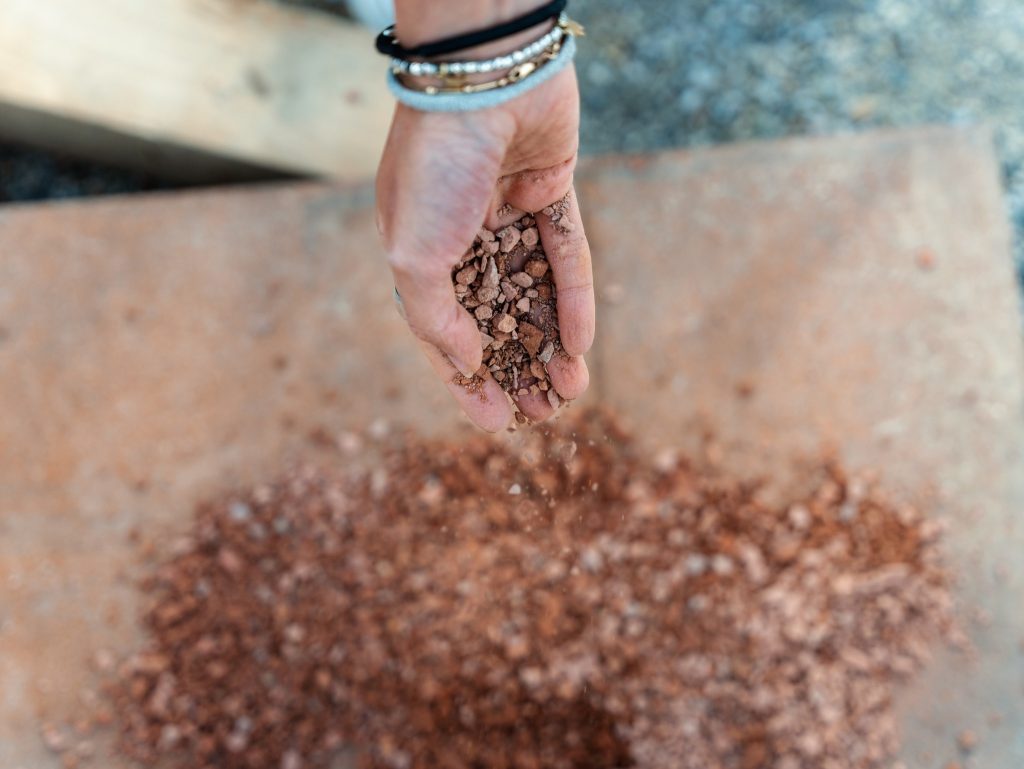

Cocciopesto and concrete amphorae
Part of the Acrux Investments portfolio are now the exclusive Drunk Turtle amphorae, which are handmade and suitable for both fermentation and aging of wine, as well as for aging beer and distillates.
Micro-oxygenation
Oxygen is essential in the maturation and refinement process of wine. Micro-oxygenation is a technique through which a certain amount of oxygen is released into the wine. It can be made artificially, through special tools, or naturally.
The cocciopesto is able to ensure a slow and continuous administration of oxygen. The speed of the intake thus always remains lower than its consumption. The cocciopesto is not an invasive material and therefore the product is able to fully develop its characteristics during the winemaking and refinement process. Therefore, thanks to its porosity, the cocciopesto allows a natural micro-oxygenation through the slow release of oxygen.
Oxygen has a clear influence on many aspects of the winemaking process and on everything that defines a wine. If the dose of oxygen administered is correct, it is able to have beneficial effects and improve the final product. The right degree of oxidation can in fact help stabilize the colour, favor the evolution of the aroma and soften the tannic astringency. In addition, it avoids the formation of hints of reduction.
Organoleptic influence
Cocciopesto DT is an “inert” wine material, or rather, it does not release smells or tastes to the liquid but it allows the right micro-oxygenation, which is essential for aging. Today’s producers are increasingly looking for the naturalness of the product and favor agronomic practices dictated by organic or biodynamic regulations. Opus amphorae for wine perfectly embraces this philosophy.
Ovoid shape
The ovoid shape of the tank of the amphorae for wine is connected to tradition but it has been revisited with a view to professional use. The internal inverted ovoid shape is in fact ideal for the winemaking because it favours the condensation of fermentation gases. Furthermore, it facilitates the creation of a convective motion that helps the must to move naturally while keeping the fine lees in suspension.
Structure without reinforcement
Thanks to the careful work of our engineers, we were able to produce tanks, even with a very high capacity, without the need for internal metal cages. This avoids the formation of electrostatic charges, which are harmful for the correct aging of the wine. As they do not contain metal armour that could deform with sudden changes in temperature, the Drunk Turtle wine amphorae can also be kept outdoors.
Thermal inertia
The walls of the wine amphorae are thick enough to ensure that, as the external temperature changes, the internal one does not undergo sudden transformations. In this way, it is obtained a more natural management of the product temperature. Moreover, the number of forced cooling interventions is also significantly reduced and this means obtaining substantial energy savings, safeguarding consumption and the environment.
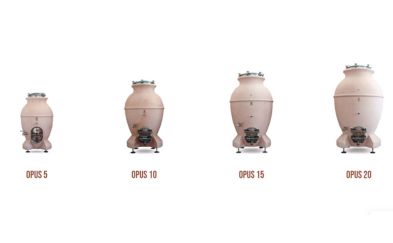
The amphorae are available in several sizes with different capacities. You can see what types there are by clicking here.
The Romans are the first people who began to use cocciopesto on a large scale for several purposes.
As a waterproofing plaster for cisterns, tubs, terraces, thermal pools and masonry works against the ground.
As interior flooring, developing a simple and refined decorative repertoire and, at the same time an economical, robust and continuous walking surface.
The Romans called this technique Opus Signorum, from the name of the city of Signia, today’s Segni. This town was the largest brick production centre of the time, especially popular for the production of tiles.
The original cocciopesto mixture was a mixture of brick and stone fragments, hydraulic lime and water.